
The Library offers access to peer‑reviewed medical, surgical, psychological, and public‑health research that support Be BiteSmart’s evidence‑based response to the longstanding need for effective, age‑appropriate education to prevent child dog‑bite injuries.
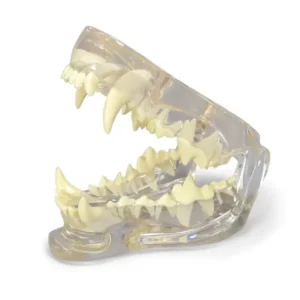
This image of a dogs jaw shows why any size dog can cause serious traumatic damage to the soft facial tissue of a young child.
Scope of the problem: “There are no global estimates of dog bite incidence, however studies suggest that dog bites account for tens of millions of injuries annually. In the United States of America for example, approximately 4.5 million people are bitten by dogs every year. Low- and middle-income country data are more fragmented, however some studies reveal that dogs account for 76–94% of animal bite injuries.” ~ World Health Organization
Medical & Scientific Evidence Categories
- Epidemiology, Severity, and Hospital Burden (Pediatric)
- Clinical Management & Surgical Decision-Making
- Reconstructive Surgery (Face / Scalp / Nose / Lip / Ear) – Pediatric
- Neck / Throat / Airway Injuries – Pediatric
- Psychological Sequelae & Treatment Needs (Child + Family)
- Prevention Evidence – Directly Supporting Bite-Prevention Education
Epidemiology, Severity, and Hospital Burden (Pediatric)
Analysis of Pediatric Dog Bite Injuries at a Level 1 Trauma Center Over 10 Years
Why it matters
Demonstrates that pediatric dog bites—especially to the head and face—frequently require surgical intervention, underscoring the medical and economic burden of preventable injuries.
Conclusion Quote
“Our data reflect a need for safety education on animal care, behavior, and interaction.”
Pediatric Patients with Dog Bites Presenting to US Children’s Hospitals
Why it matters
Shows national-scale patterns of pediatric dog bites, including high rates of head and facial injuries in young children.
Paediatric Dog Bite Injuries: a 10-Year Retrospective Cohort Analysis
Why it matters
Confirms sustained injury rates over a decade and documents treatment complexity and costs borne by children’s hospitals.
Conclusion Quote
“Dog bite injuries are largely preventable yet present the most common animal related cause of hospitalization . . . . we expect that this study will stimulate potential public health campaigns targeted at educating parents and children on interacting with dogs to minimise these injuries.”
Early Childhood (0–5 years) Presents the Greatest Risk for Facial Dog Bites
Why it matters
Identifies toddlers and preschool-aged children as the highest-risk group, reinforcing the importance of age-appropriate prevention.
Conclusion Quote
“To reduce the risk for facial dog bites and the host of chronic psychological ramifications that accompany them, established preventative strategies ought to be exercised.”
Pediatric Dog Bite Injuries in the USA: a Systematic Review
Why it matters
Synthesizes national evidence showing dog bites as a persistent, largely preventable public-health problem affecting children. Calls for Bite-Prevention Education.
Conclusion Quote
“Studies analyzing the prevention or psychosocial consequences of dog bites injuries are needed”
Verbatim Medical Quote
“Dog bite injuries in children remain a significant public health concern despite being largely preventable.”
Dog Bites: Still a Problem?
Why it matters
National injury surveillance analysis showing dog bites remain a significant public health problem and underscoring the need for effective prevention programs.
Conclusion Quote
“Dog bites continue to be a public health problem affecting 1.5% of the US population annually . . . . there still appears to be a need for effective prevention programs.”
Verbatim Quote
“Dog bites are an important public health problem, particularly for children”
Pediatric Dog Bite Injuries: a 5-Year Review of the Experience at The Children’s Hospital of Philadelphia
Why it matters
Large pediatric-hospital series characterizing injury patterns and emphasizing that public education and injury prevention are relevant to reducing severe pediatric injuries.
Conclusion Quote
“Pediatric dog bites are preventable injuries, yet they persist as a prevalent public health problem”
Clinical Management & Surgical Decision-Making
Pet Dog Bites in Children: Management and Prevention
Why it matters
Highlights that many pediatric dog bites are preventable and emphasizes clinician-led education as part of routine care. Calls for Bite-Prevention Education.
Quote – Need for Educated Supervision
“Close supervision of child–dog interactions by an adult who is both in close proximity and has been educated to interpret dog body language appropriately has a potential to prevent bites. However, a general lack of understanding that any dog can react aggressively towards any human under particular circumstances, hinders bite prevention. Compared with dog behaviour experts, dog-owning caregivers without expert knowledge of dog behaviour permit more high-risk interactions between children and both familiar and unfamiliar dogs (such as laying down in a dog’s bed or taking a dog’s bone away) and assess the risk of interactions as lower. The perception that one is not at risk around a familiar dog could help to explain why over 50% of caregivers leave children unattended around family dogs at least for a short period of time.”
Dog Bites and Maxillofacial Surgery: What Can We Do?
Why it matters
Clinical series/review highlighting presentation patterns and management considerations relevant to hospital burden and prevention counseling.
Verbatim Quote
“The vast majority of dog bites occur in the home and involve a familiar dog.”
Reconstructive Surgery (Face / Scalp / Nose / Lip / Ear) – Pediatric
Outcomes of Dog Bite Avulsion Injury Reconstruction With Porcine Urinary Bladder Matrix
Why it matters
Why it matters: Illustrates the need for advanced reconstructive materials and staged surgeries following severe pediatric dog bite injuries.
Hyperbaric Oxygen Therapy for Large Composite Grafts
Why it matters
Demonstrates the complexity and resource intensity of reconstructing tissue lost to dog bite avulsions in children.
Pediatric Alloplastic Nose Reconstruction Using a 3D-Printed Implant After Dog Bite
Why it matters
Shows that dog bites can permanently alter facial structure in children, requiring advanced reconstructive solutions.
Pediatric Reconstruction of Full-Thickness Dog Bite Scalp Defect
Why it matters
Demonstrates catastrophic tissue loss and the need for multi-stage reconstruction following severe pediatric dog attacks.
Management of Severe Pediatric Lower Lip Defect After Canine Bite
Why it matters
Highlights the functional, cosmetic, and psychological consequences of facial dog bites requiring surgical repair.
Neck / Throat / Airway Injuries – Pediatric
Management of Dog-Related Penetrating Laryngotracheal Trauma in a Pediatric Patient
Why it matters
Documents life-threatening airway injuries in children caused by dog bites.
Psychological Sequelae & Treatment Needs (Child + Family)
Review of Psychological Effects of Dog Bites in Children
Why it matters
Details PTSD, anxiety, dog phobia, and long-term emotional harm experienced by children after dog bite trauma.
Verbatim Medical Quote
“Dog bite injuries can result in long-lasting psychological trauma for children.”
Psychological Sequelae of Dog Bites in Children: A Review
Why it matters
Shows that psychological injuries often persist long after physical wounds heal, affecting children and families. Calls for Bite-Prevention Education.
Prevention Evidence – Directly Supporting Bite-Prevention Education
Systematic Review of Dog Bite Prevention Strategies
Why it matters
Concludes that education and structured prevention strategies are essential to reducing dog bite injuries in children. Calls for Bite-Prevention Education.
Verbatim Medical Quote
“Educational strategies aimed at children and caregivers are critical components of dog bite prevention.”
Preventing Dog Bites in Children: Randomised Controlled Trial of an Educational Intervention
Why it matters
Randomized controlled trial evidence that a structured educational program can measurably improve children’s precautionary behaviors around unfamiliar dogs.
Verbatim Quote
“Educational interventions aimed at children can improve precautionary behaviors around dogs, which may reduce dog bite injuries.”
Interventions to Educate Children About Dog Safety and Prevent Pediatric Dog-Bite Injuries: A Systematic Review
Why it matters
Why it matters: Systematic review of child-focused cognitive/behavioral interventions; supports education as an evidence-based prevention strategy while noting the need for stronger outcome follow-up.
Verbatim Quote
“Prevention efforts include education for children and families.”
Dog Bite Prevention: Effect of a Short Educational Intervention for Preschool Children
Why it matters
Why it matters: Preschool children significantly improved their ability to recognize canine behavioral cues associated with safer interactions after instruction.
Teaching Children and Parents to Understand Dog Signaling
Why it matters
Demonstrated that children ages 3–5 could improve their understanding of canine distress signaling relevant to dog safety and bite prevention.